
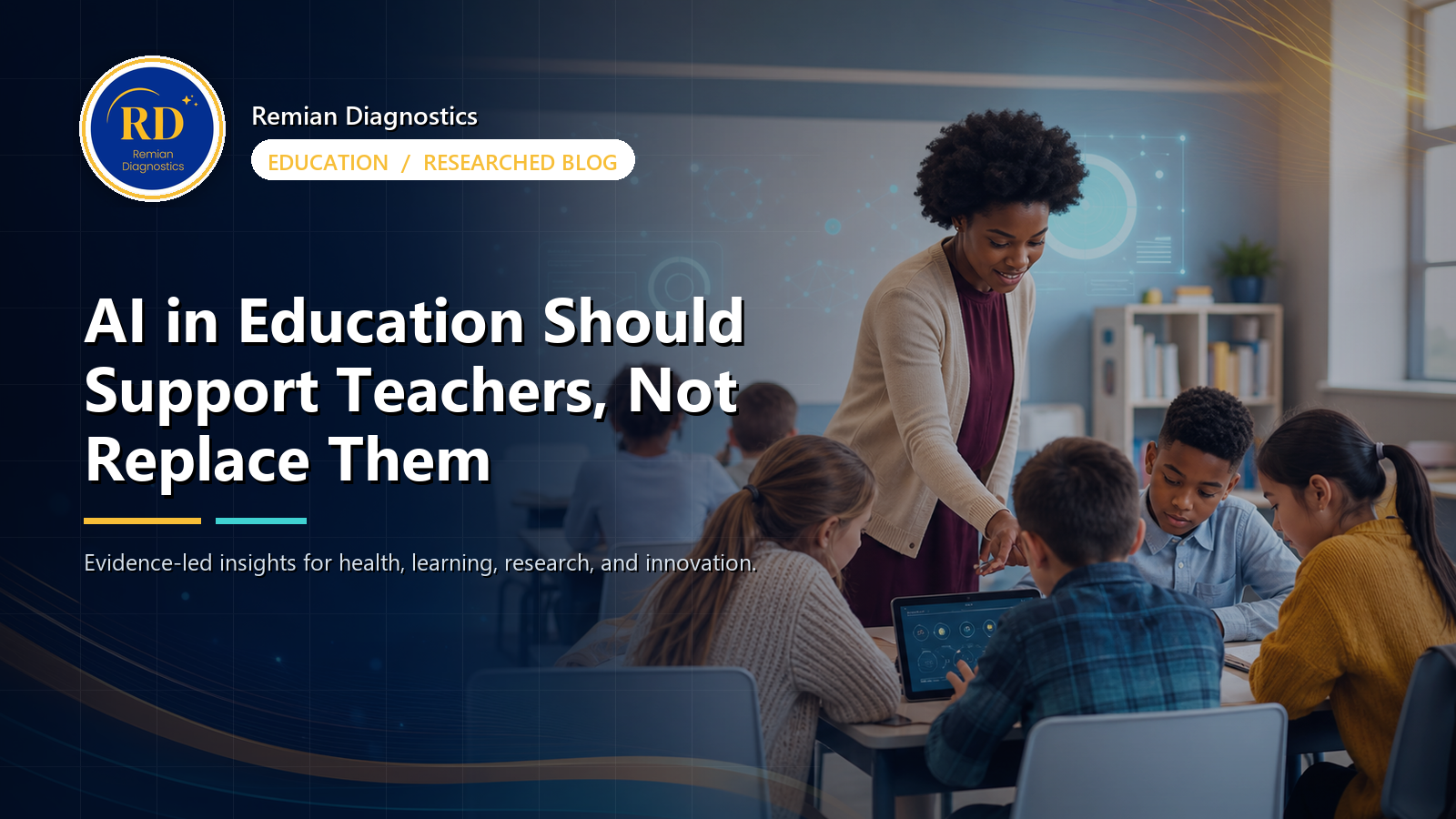
Artificial intelligence can help educators personalize learning, reduce routine workload, and expand access to resources, but it must be guided by human judgment.
The promise
AI tools can help teachers prepare lesson outlines, generate practice questions, translate learning materials, summarize content, and identify where learners may need support. For students, AI can provide explanations, revision prompts, and feedback that may not be available outside class time.
These benefits matter because many education systems face large classes, limited resources, and uneven access to specialist support. Used responsibly, AI can make learning support more available and help teachers spend more energy on mentorship, assessment, and higher-order thinking.
The limits
AI does not understand a learner the way a teacher does. It can produce errors, reinforce bias, generate shallow answers, or encourage dependency if learners use it without guidance. UNESCO has emphasized that AI in education brings both opportunities and risks, especially when policy and regulation lag behind technology.
The classroom is not just a content delivery space. It is where learners build confidence, ethics, curiosity, discipline, collaboration, and communication. These human parts of learning cannot be automated.
A better approach
Schools, universities, and professional training organizations should define clear rules for AI use. Learners should know when AI support is allowed, when original work is required, and how to verify information. Teachers need training so they can use AI as a teaching aid rather than treating it as either a threat or a shortcut.
The goal should be human-centered education. AI can support better access to learning, but the teacher remains the professional who understands context, values, and learner growth.
Key takeaways
- AI can support lesson preparation, feedback, and learner practice.
- Teachers remain essential for judgment, ethics, mentorship, and context.
- Clear rules are needed so AI strengthens learning instead of weakening it.
Sources reviewed
This article is an original Remian Diagnostics educational post prepared from public, reputable sources. It is not copied from the linked references.