
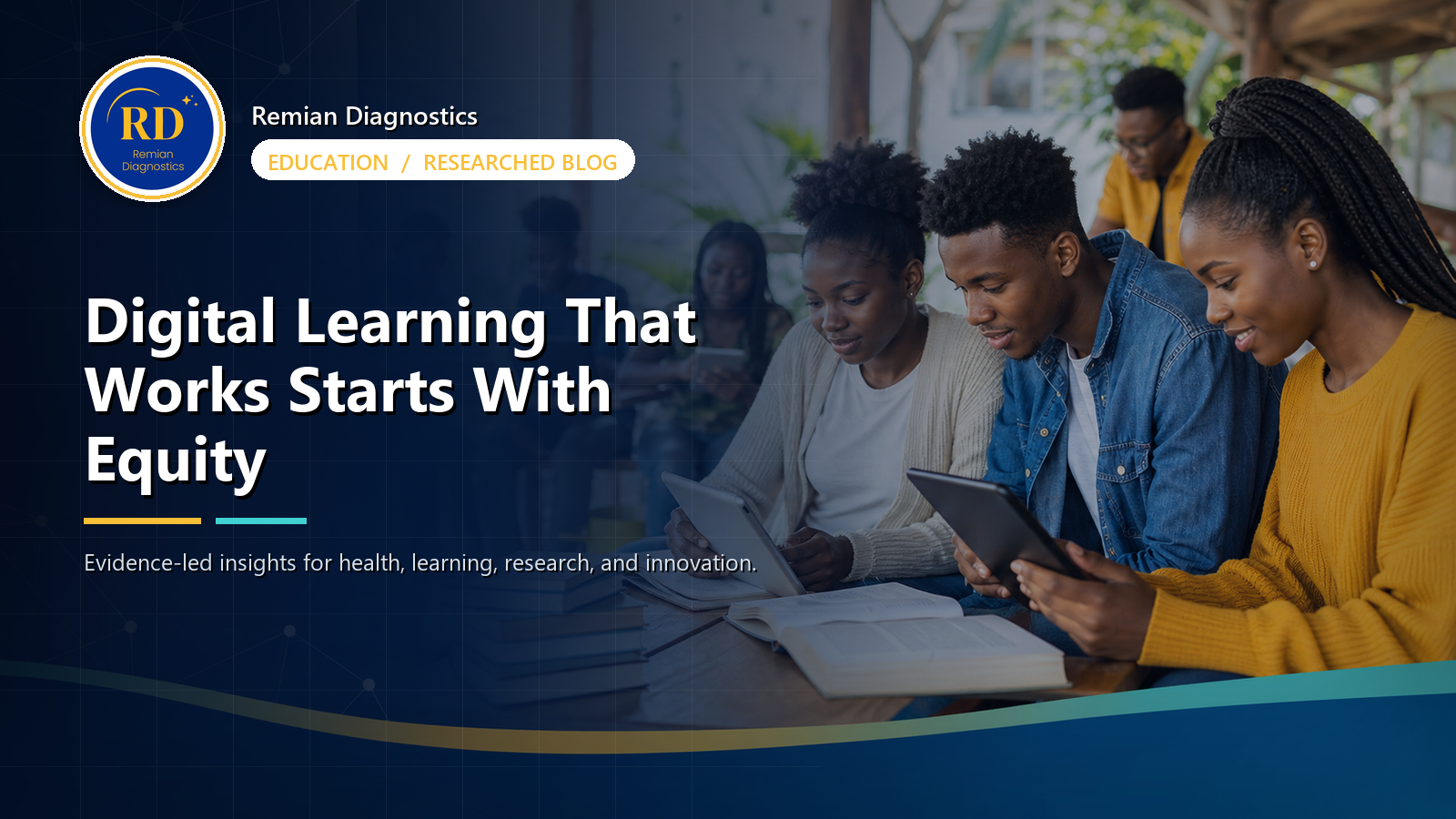
Digital learning can expand opportunity, but only when it is designed around access, inclusion, teacher support, and measurable learning outcomes.
The access question
Digital education is often discussed as if every learner has a device, stable internet, electricity, and quiet study time. Many do not. The World Bank and UNICEF continue to highlight major gaps in access to education technology and learning support. That means digital education must be planned with equity at the center.
Equity does not mean giving every learner the same tool. It means understanding barriers and designing support around them. For some learners, mobile-first content is more realistic than desktop systems. For others, offline access, radio, printed materials, community learning hubs, or blended learning may be necessary.
Teachers are still the multiplier
Technology works best when teachers are trained, supported, and trusted. A learning management system does not automatically improve learning. The improvement comes when teachers use data to identify gaps, provide timely feedback, and connect digital activities to clear learning goals.
Professional development is therefore part of digital education. Teachers and trainers need confidence in using tools, protecting learner data, designing assessments, and supporting learners who are struggling.
Measuring what matters
Digital learning projects should be evaluated by learning progress, retention, participation, confidence, and inclusion, not only by logins or downloads. A system can look active while learners remain unsupported.
For professional education, the lesson is similar. A webinar, online course, or digital resource should be accessible, well structured, relevant to practice, and supported by clear follow-up. Technology should make learning easier to attend, easier to understand, and easier to apply.
Key takeaways
- Digital learning must be designed for learners with different levels of access.
- Teacher support is central to successful education technology.
- Impact should be measured through learning outcomes, not only usage numbers.
Sources reviewed
This article is an original Remian Diagnostics educational post prepared from public, reputable sources. It is not copied from the linked references.